
Gas Boiler Installation Reading: What Should a Professional Installation Process Include?
A new gas boiler is a significant part of a home’s heating system, so the quality of the installation matters just as much as the appliance selected. A professional installation should involve careful planning, suitable components, correct connections and thorough commissioning.

Why you can trust our content
We understand that the boiler industry can be confusing, with plenty of outdated or misleading information. That’s why we rely only on trusted, proven sources to guide our advice and installations:

At a glance
For homeowners comparing installers, it can be difficult to know what should actually happen beyond the basic fitting of the boiler. A proper process starts before installation day and continues through testing and handover.
Understanding the stages involved in gas boiler installation reading can help homeowners ask better questions, compare quotations more accurately and recognise what a well-planned installation should cover.
What should happen before a gas boiler is installed?
The process should begin with an assessment of the property and existing heating system. The installer needs to understand the current arrangement before deciding how the replacement should be fitted.
This may include checking:
- Existing boiler type and location
- Heating and hot water requirements
- Gas supply and pipework
- Existing flue arrangement
- Heating pipework
- Condensate drainage
- Electrical connections
- Heating controls
- Access to the installation area
- Space available around the boiler
The assessment also gives the homeowner an opportunity to explain any existing heating problems or changes they would like to make.
A detailed assessment can help identify potential work before the installation starts rather than discovering every requirement on the day.
If you are planning a gas boiler replacement, contact Heatxpert to discuss your property’s requirements and understand what the installation would involve before agreeing to the work.
How is the correct gas boiler selected?
The boiler should be selected according to the property’s heating and hot water requirements, not simply based on the physical size of the existing appliance.
Relevant considerations can include:
- Property size and layout
- Number of bathrooms
- Hot water demand
- Existing heating system
- Available boiler location
- Available gas supply
- Existing pipework
- Household usage patterns
Different homes have different requirements. A boiler that works well in one property may not be the appropriate choice for another.
The installer should explain why a particular boiler and output have been recommended, rather than leaving the homeowner to choose based solely on brand or price.
Why is the boiler location important?
The boiler needs to be positioned somewhere suitable for installation, operation, servicing and connection to the relevant services.
The proposed location can affect the amount of work required. Keeping the replacement close to the existing boiler may reduce alterations, while moving it can require additional pipework, flue work and drainage arrangements.
The installer should consider:
- Access for servicing
- Flue route
- Gas connection
- Heating pipework
- Water connections
- Condensate drainage
- Electrical supply
- Available working space
If relocation is being considered, it should be included in the installation plan and quotation.
What should happen to the gas supply?
The gas supply needs to be suitable for the new appliance. The installer should assess the existing gas pipework and determine whether any changes are required.
This is particularly important where the replacement boiler has different requirements from the previous appliance.
Any necessary alterations should form part of the agreed scope of work. The homeowner should understand whether the quoted price includes the required gas pipework or whether it is subject to further assessment.
Gas work should always be undertaken by an appropriately qualified and registered professional.
What does the flue installation involve?
The flue is a critical component because it safely directs combustion products away from the boiler and out of the property.
The installation process should consider the correct flue components, route, termination point and requirements associated with the particular boiler.
A like-for-like replacement may have a relatively straightforward flue arrangement, but changing the boiler location can make the work more involved.
The flue should not simply be treated as an accessory to the boiler. Its installation forms an important part of the complete heating system.
What happens to the condensate pipe?
Modern condensing gas boilers produce condensate during normal operation. This needs to be discharged through an appropriate drainage arrangement.
The installer should plan the condensate route as part of the installation rather than leaving it until the end.
Depending on the boiler location and property layout, the pipe may need to connect to a suitable internal or external drainage point. The arrangement needs to be installed appropriately to reduce the risk of freezing or other drainage problems.
If the boiler is relocated, the condensate route may need to change as well.
Are heating controls part of the installation?
They can be. The controls determine how the boiler and heating system respond to the homeowner’s settings and schedule.
Depending on the system, controls may include:
- Room thermostats
- Programmers
- Programmable thermostats
- Wireless controls
- Compatible advanced controls
The installer should make sure the chosen controls are compatible with the boiler and explain their basic operation during handover.
When comparing quotations, check whether controls are included because two otherwise similar installations may have different specifications.
Let’s get started, Which fuel powers your boiler?
Mains Gas
LPG
Oil
It just takes 60 Seconds
And then you can book a free consultation
What happens on installation day?
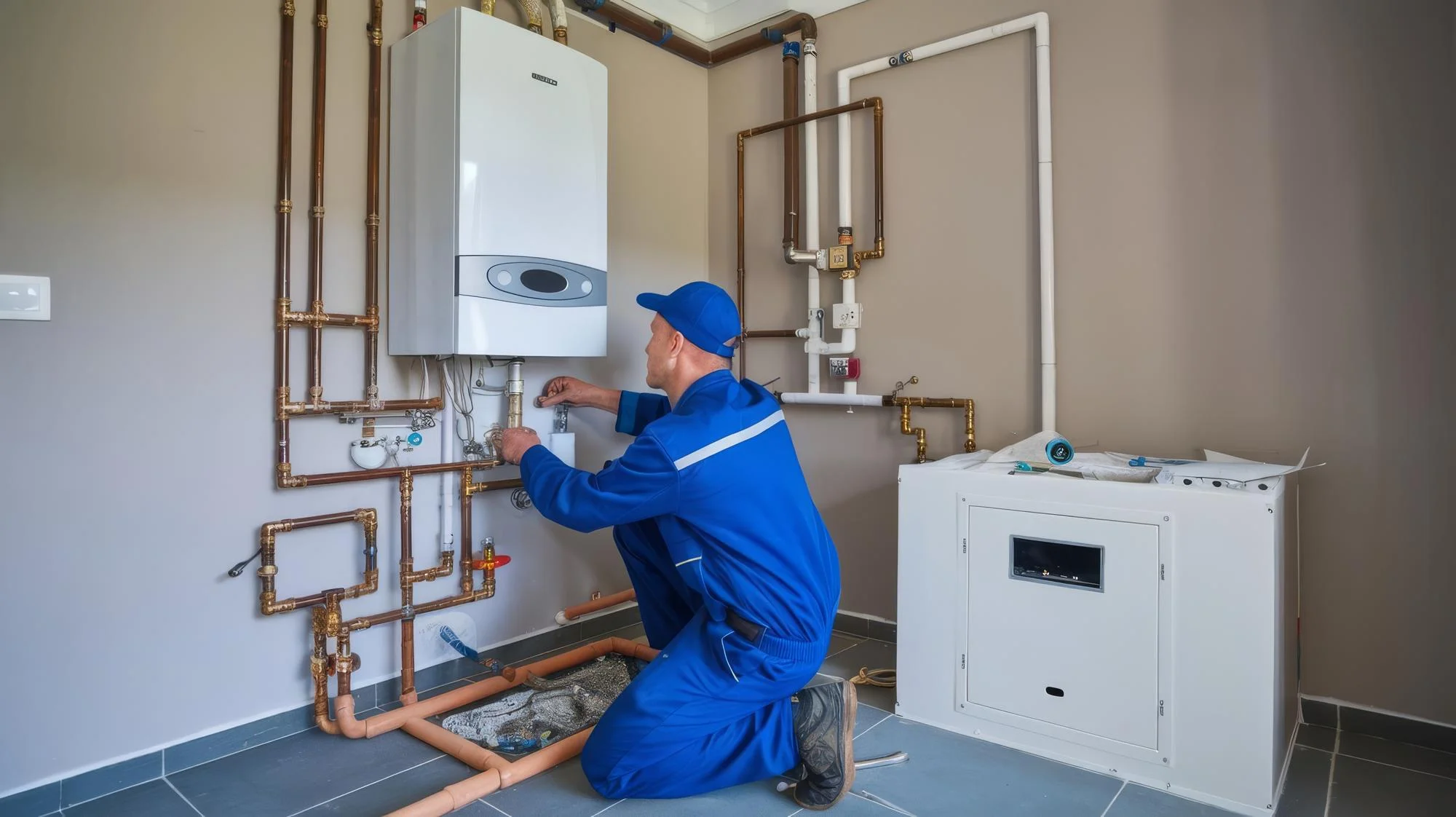
Once the installation plan has been confirmed, the existing boiler is isolated and removed along with any components included in the agreed scope.
The installer then prepares the area for the replacement appliance. Depending on the project, this can involve adapting pipework, installing the new flue, preparing condensate drainage and fitting controls.
A typical installation may involve:
- Preparing the working area
- Isolating the existing system
- Removing the old boiler
- Preparing the new installation position
- Installing the replacement boiler
- Connecting gas and heating pipework
- Connecting water services where applicable
- Installing the flue
- Connecting the condensate pipe
- Installing controls
- Checking the system
- Commissioning the appliance
The sequence can vary depending on the property and boiler model.
How important is system preparation?
System preparation can have a major influence on the final result. A new boiler is connected to an existing heating system, so the condition of that system matters.
The installer may identify issues involving:
- Old valves
- Poor circulation
- Leaking connections
- Corroded components
- Contaminated heating water
- Inadequate controls
- Unsuitable pipework
Not every issue will require replacement, but anything relevant to the new installation should be considered.
A professional gas boiler installation company should be able to explain why particular preparation work is being recommended rather than simply adding unexplained extras to the quotation.
What happens if additional work is discovered?
Sometimes an installation reveals a problem that could not reasonably be identified before the old appliance was removed.
If this happens, the homeowner should be told what has been discovered and why the additional work is necessary.
Ask for:
- A clear explanation of the issue
- The proposed solution
- The additional materials required
- The additional labour involved
- Any change to the agreed price
- The potential consequences of not addressing the problem
Where practical, additional work should be agreed before it is undertaken.
If you receive a recommendation for additional installation work and want to understand its purpose, speak to Heatxpert. The team can explain how the proposed work relates to the wider heating system.
What testing should be completed after installation?
A professional installation does not finish when the boiler starts operating.
The completed system needs to be checked and commissioned in accordance with the appliance manufacturer’s requirements and applicable installation procedures.
This can include checking:
|
Area |
What may be checked |
|
Boiler |
Correct operation and settings |
|
Gas installation |
Connections and supply |
|
Flue |
Installation and termination |
|
Heating circuit |
Operation and pressure |
|
Hot water |
Delivery and operation |
|
Condensate |
Drainage arrangement |
|
Controls |
Thermostat and programming |
|
System |
Overall operation |
The exact checks will depend on the appliance and installation.
The homeowner should be able to use the system safely and understand its basic controls before the installer leaves.
Why is commissioning important?
Commissioning confirms that the installed appliance has been set up correctly and that the heating system is operating as intended.
The installer should follow the manufacturer’s commissioning requirements and complete the relevant documentation.
Commissioning also gives an opportunity to identify problems before the installation is considered complete.
This is particularly important because a boiler can appear to be working while another part of the installation has not been configured correctly.
What should happen during the final handover?
The final handover should provide the homeowner with practical information about the new system.
The installer should explain:
- How to switch the heating on and off
- How to adjust the thermostat
- How to programme heating times
- How to use hot water controls where applicable
- What the normal system pressure should be
- Where the boiler instructions are kept
- What servicing requirements apply
- What warranty information has been provided
It is worth asking questions at this stage. A few minutes spent understanding the controls can make the new system much easier to use.
How should homeowners compare gas boiler installers?
When comparing a gas boiler installation company, look at the complete installation process rather than simply comparing appliance prices.
Consider whether the installer:
- Carries out an appropriate property assessment
- Explains the recommended boiler
- Provides a detailed quotation
- Identifies the proposed flue arrangement
- Explains controls
- Includes relevant installation components
- Discusses system preparation
- Explains how additional work would be handled
- Includes testing and commissioning
- Provides a clear handover
The quotation should give you enough information to understand what you are paying for.
A typical Reading installation
Imagine a homeowner in a semi-detached property whose existing gas boiler has become unreliable. The boiler is positioned in a kitchen cupboard and the homeowner wants a modern replacement without changing the location.
During the assessment, the installer checks the boiler position, gas supply, flue, heating pipework, condensate drainage and controls. The replacement is planned around the existing layout, with specific alterations included in the quotation.
On installation day, the old boiler is removed and the new appliance fitted. The required connections are completed, controls are installed and the system is tested and commissioned before the homeowner receives a handover.
This type of planned replacement is different from an emergency installation where the existing appliance has already failed. Planning ahead can give the homeowner more time to understand the proposed work.
What should a gas boiler installation quotation include?
A useful quotation should make the scope of work clear.
Look for details covering:
- Boiler make and model
- Boiler output
- Installation location
- Flue
- Gas pipework
- Heating connections
- Condensate
- Controls
- Removal and disposal
- Additional components
- Labour
- Testing and commissioning
- Warranty information
- Any exclusions
A detailed quotation makes it easier to compare installers fairly and reduces uncertainty about what happens after the work begins.
What can homeowners do before installation day?
There are several simple ways to prepare.
Make sure the installer can access the boiler, controls and relevant heating components. If the proposed work involves a cupboard, loft space or external wall, clear access where possible.
Also make a note of any heating issues that have occurred recently. If the system has been losing pressure, producing unusual noises or struggling with hot water, mention these during the assessment.
It can also be useful to decide whether you want to keep the boiler in its current location or explore alternatives before the quotation is finalised.
If you are planning a replacement and want a clear understanding of what the installation should involve, contact Heatxpert. The team can assess your property and discuss the appropriate options.
A professional gas boiler installation is a planned process that begins before the old appliance is removed. The property should be assessed, the boiler selected according to the home’s requirements, and the installation scope clearly explained.
Gas supply, flue arrangements, condensate drainage, controls, pipework and system condition all form part of the wider job. After fitting, the appliance should be properly tested and commissioned, with the homeowner shown how to use the new system.
For anyone researching gas boiler installation reading, understanding these stages can make it easier to compare quotations and know what to expect from a professional installation.
Heatxpert can provide practical guidance based on the individual property, helping homeowners approach a new boiler installation with a clear understanding of the work involved.
Related articles
Let’s get started, Which fuel powers your boiler?
Mains Gas
LPG
Oil
At a glance
For homeowners comparing installers, it can be difficult to know what should actually happen beyond the basic fitting of the boiler. A proper process starts before installation day and continues through testing and handover.
Understanding the stages involved in gas boiler installation reading can help homeowners ask better questions, compare quotations more accurately and recognise what a well-planned installation should cover.
What should happen before a gas boiler is installed?
The process should begin with an assessment of the property and existing heating system. The installer needs to understand the current arrangement before deciding how the replacement should be fitted.
This may include checking:
- Existing boiler type and location
- Heating and hot water requirements
- Gas supply and pipework
- Existing flue arrangement
- Heating pipework
- Condensate drainage
- Electrical connections
- Heating controls
- Access to the installation area
- Space available around the boiler
The assessment also gives the homeowner an opportunity to explain any existing heating problems or changes they would like to make.
A detailed assessment can help identify potential work before the installation starts rather than discovering every requirement on the day.
If you are planning a gas boiler replacement, contact Heatxpert to discuss your property’s requirements and understand what the installation would involve before agreeing to the work.
How is the correct gas boiler selected?
The boiler should be selected according to the property’s heating and hot water requirements, not simply based on the physical size of the existing appliance.
Relevant considerations can include:
- Property size and layout
- Number of bathrooms
- Hot water demand
- Existing heating system
- Available boiler location
- Available gas supply
- Existing pipework
- Household usage patterns
Different homes have different requirements. A boiler that works well in one property may not be the appropriate choice for another.
The installer should explain why a particular boiler and output have been recommended, rather than leaving the homeowner to choose based solely on brand or price.
Why is the boiler location important?
The boiler needs to be positioned somewhere suitable for installation, operation, servicing and connection to the relevant services.
The proposed location can affect the amount of work required. Keeping the replacement close to the existing boiler may reduce alterations, while moving it can require additional pipework, flue work and drainage arrangements.
The installer should consider:
- Access for servicing
- Flue route
- Gas connection
- Heating pipework
- Water connections
- Condensate drainage
- Electrical supply
- Available working space
If relocation is being considered, it should be included in the installation plan and quotation.
What should happen to the gas supply?
The gas supply needs to be suitable for the new appliance. The installer should assess the existing gas pipework and determine whether any changes are required.
This is particularly important where the replacement boiler has different requirements from the previous appliance.
Any necessary alterations should form part of the agreed scope of work. The homeowner should understand whether the quoted price includes the required gas pipework or whether it is subject to further assessment.
Gas work should always be undertaken by an appropriately qualified and registered professional.
What does the flue installation involve?
The flue is a critical component because it safely directs combustion products away from the boiler and out of the property.
The installation process should consider the correct flue components, route, termination point and requirements associated with the particular boiler.
A like-for-like replacement may have a relatively straightforward flue arrangement, but changing the boiler location can make the work more involved.
The flue should not simply be treated as an accessory to the boiler. Its installation forms an important part of the complete heating system.
What happens to the condensate pipe?
Modern condensing gas boilers produce condensate during normal operation. This needs to be discharged through an appropriate drainage arrangement.
The installer should plan the condensate route as part of the installation rather than leaving it until the end.
Depending on the boiler location and property layout, the pipe may need to connect to a suitable internal or external drainage point. The arrangement needs to be installed appropriately to reduce the risk of freezing or other drainage problems.
If the boiler is relocated, the condensate route may need to change as well.
Are heating controls part of the installation?
They can be. The controls determine how the boiler and heating system respond to the homeowner’s settings and schedule.
Depending on the system, controls may include:
- Room thermostats
- Programmers
- Programmable thermostats
- Wireless controls
- Compatible advanced controls
The installer should make sure the chosen controls are compatible with the boiler and explain their basic operation during handover.
When comparing quotations, check whether controls are included because two otherwise similar installations may have different specifications.
Let’s get started, Which fuel powers your boiler?
Mains Gas
LPG
Oil
It just takes 60 Seconds
And then you can book a free consultation
What happens on installation day?
Once the installation plan has been confirmed, the existing boiler is isolated and removed along with any components included in the agreed scope.
The installer then prepares the area for the replacement appliance. Depending on the project, this can involve adapting pipework, installing the new flue, preparing condensate drainage and fitting controls.
A typical installation may involve:
- Preparing the working area
- Isolating the existing system
- Removing the old boiler
- Preparing the new installation position
- Installing the replacement boiler
- Connecting gas and heating pipework
- Connecting water services where applicable
- Installing the flue
- Connecting the condensate pipe
- Installing controls
- Checking the system
- Commissioning the appliance
The sequence can vary depending on the property and boiler model.
How important is system preparation?
System preparation can have a major influence on the final result. A new boiler is connected to an existing heating system, so the condition of that system matters.
The installer may identify issues involving:
- Old valves
- Poor circulation
- Leaking connections
- Corroded components
- Contaminated heating water
- Inadequate controls
- Unsuitable pipework
Not every issue will require replacement, but anything relevant to the new installation should be considered.
A professional gas boiler installation company should be able to explain why particular preparation work is being recommended rather than simply adding unexplained extras to the quotation.
What happens if additional work is discovered?
Sometimes an installation reveals a problem that could not reasonably be identified before the old appliance was removed.
If this happens, the homeowner should be told what has been discovered and why the additional work is necessary.
Ask for:
- A clear explanation of the issue
- The proposed solution
- The additional materials required
- The additional labour involved
- Any change to the agreed price
- The potential consequences of not addressing the problem
Where practical, additional work should be agreed before it is undertaken.
If you receive a recommendation for additional installation work and want to understand its purpose, speak to Heatxpert. The team can explain how the proposed work relates to the wider heating system.
What testing should be completed after installation?
A professional installation does not finish when the boiler starts operating.
The completed system needs to be checked and commissioned in accordance with the appliance manufacturer’s requirements and applicable installation procedures.
This can include checking:
|
Area |
What may be checked |
|
Boiler |
Correct operation and settings |
|
Gas installation |
Connections and supply |
|
Flue |
Installation and termination |
|
Heating circuit |
Operation and pressure |
|
Hot water |
Delivery and operation |
|
Condensate |
Drainage arrangement |
|
Controls |
Thermostat and programming |
|
System |
Overall operation |
The exact checks will depend on the appliance and installation.
The homeowner should be able to use the system safely and understand its basic controls before the installer leaves.
Why is commissioning important?
Commissioning confirms that the installed appliance has been set up correctly and that the heating system is operating as intended.
The installer should follow the manufacturer’s commissioning requirements and complete the relevant documentation.
Commissioning also gives an opportunity to identify problems before the installation is considered complete.
This is particularly important because a boiler can appear to be working while another part of the installation has not been configured correctly.
What should happen during the final handover?
The final handover should provide the homeowner with practical information about the new system.
The installer should explain:
- How to switch the heating on and off
- How to adjust the thermostat
- How to programme heating times
- How to use hot water controls where applicable
- What the normal system pressure should be
- Where the boiler instructions are kept
- What servicing requirements apply
- What warranty information has been provided
It is worth asking questions at this stage. A few minutes spent understanding the controls can make the new system much easier to use.
How should homeowners compare gas boiler installers?
When comparing a gas boiler installation company, look at the complete installation process rather than simply comparing appliance prices.
Consider whether the installer:
- Carries out an appropriate property assessment
- Explains the recommended boiler
- Provides a detailed quotation
- Identifies the proposed flue arrangement
- Explains controls
- Includes relevant installation components
- Discusses system preparation
- Explains how additional work would be handled
- Includes testing and commissioning
- Provides a clear handover
The quotation should give you enough information to understand what you are paying for.
A typical Reading installation
Imagine a homeowner in a semi-detached property whose existing gas boiler has become unreliable. The boiler is positioned in a kitchen cupboard and the homeowner wants a modern replacement without changing the location.
During the assessment, the installer checks the boiler position, gas supply, flue, heating pipework, condensate drainage and controls. The replacement is planned around the existing layout, with specific alterations included in the quotation.
On installation day, the old boiler is removed and the new appliance fitted. The required connections are completed, controls are installed and the system is tested and commissioned before the homeowner receives a handover.
This type of planned replacement is different from an emergency installation where the existing appliance has already failed. Planning ahead can give the homeowner more time to understand the proposed work.
What should a gas boiler installation quotation include?
A useful quotation should make the scope of work clear.
Look for details covering:
- Boiler make and model
- Boiler output
- Installation location
- Flue
- Gas pipework
- Heating connections
- Condensate
- Controls
- Removal and disposal
- Additional components
- Labour
- Testing and commissioning
- Warranty information
- Any exclusions
A detailed quotation makes it easier to compare installers fairly and reduces uncertainty about what happens after the work begins.
What can homeowners do before installation day?
There are several simple ways to prepare.
Make sure the installer can access the boiler, controls and relevant heating components. If the proposed work involves a cupboard, loft space or external wall, clear access where possible.
Also make a note of any heating issues that have occurred recently. If the system has been losing pressure, producing unusual noises or struggling with hot water, mention these during the assessment.
It can also be useful to decide whether you want to keep the boiler in its current location or explore alternatives before the quotation is finalised.
If you are planning a replacement and want a clear understanding of what the installation should involve, contact Heatxpert. The team can assess your property and discuss the appropriate options.
A professional gas boiler installation is a planned process that begins before the old appliance is removed. The property should be assessed, the boiler selected according to the home’s requirements, and the installation scope clearly explained.
Gas supply, flue arrangements, condensate drainage, controls, pipework and system condition all form part of the wider job. After fitting, the appliance should be properly tested and commissioned, with the homeowner shown how to use the new system.
For anyone researching gas boiler installation reading, understanding these stages can make it easier to compare quotations and know what to expect from a professional installation.
Heatxpert can provide practical guidance based on the individual property, helping homeowners approach a new boiler installation with a clear understanding of the work involved.
