
Boiler Repair Reading: Should Existing Faults Be Diagnosed Before Installation Begins?
When a boiler starts making unusual noises, losing pressure or repeatedly shutting down, replacement can seem like the obvious answer. But a faulty boiler does not always mean that a new one is immediately required.

Why you can trust our content
We understand that the boiler industry can be confusing, with plenty of outdated or misleading information. That’s why we rely only on trusted, proven sources to guide our advice and installations:

At a glance
Before arranging a replacement, it can be useful to establish what has actually gone wrong. Some faults can be repaired, while others may indicate that the appliance is reaching the end of its practical service life. A proper diagnosis can help a homeowner understand the difference.
For anyone researching boiler repair reading, the important question is not simply whether the boiler is broken. It is whether the fault can be resolved sensibly, whether other parts of the heating system are involved, and whether replacement is likely to provide a more practical long-term solution.
Why should a boiler fault be diagnosed before replacement?
A diagnosis provides information about the condition of the existing appliance and heating system. Without one, it can be difficult to know whether replacement is necessary or whether a relatively straightforward repair could restore the boiler to working order.
A heating engineer may investigate:
- The symptoms reported by the homeowner
- Fault codes shown on the boiler
- Pressure problems
- Ignition issues
- Heating and hot water performance
- Unusual noises
- Visible leaks
- Controls and thermostats
- Flue-related issues
- Relevant system components
The purpose is not necessarily to repair the boiler immediately. It is to establish what is happening so the homeowner can make an informed decision.
If your boiler has developed a fault and you are unsure whether repair or replacement makes more sense, contact Heatxpert for an assessment of the problem and practical guidance.
What common faults can affect an older boiler?
Boiler faults vary considerably. Some problems are relatively minor, while others can indicate a more significant component failure.
Common symptoms include:
- Boiler repeatedly switching off
- Loss of pressure
- No heating
- No hot water
- Radiators failing to heat properly
- Strange banging or whistling noises
- Fault codes appearing on the display
- Leaks around the boiler or heating system
- Pilot or ignition problems on applicable appliances
- Temperature problems
A symptom alone does not identify the underlying cause. For example, low pressure can have several possible causes, and a boiler repeatedly shutting down may be responding to another problem within the system.
This is why diagnosis matters before deciding what work is required.
Can a fault indicate that the boiler needs replacing?
Sometimes. The age and condition of the appliance, availability of replacement parts, frequency of breakdowns and likely repair cost can all be relevant.
An engineer may determine that a repair is technically possible but that the boiler has reached a stage where repeated repairs are becoming difficult to justify. Another appliance may have a relatively straightforward fault that can be repaired without replacement.
The decision should therefore be based on the actual condition of the system rather than a single symptom.
For homeowners looking into boiler repair reading, a diagnosis can provide useful evidence before committing to a new installation.
What happens during a boiler fault assessment?
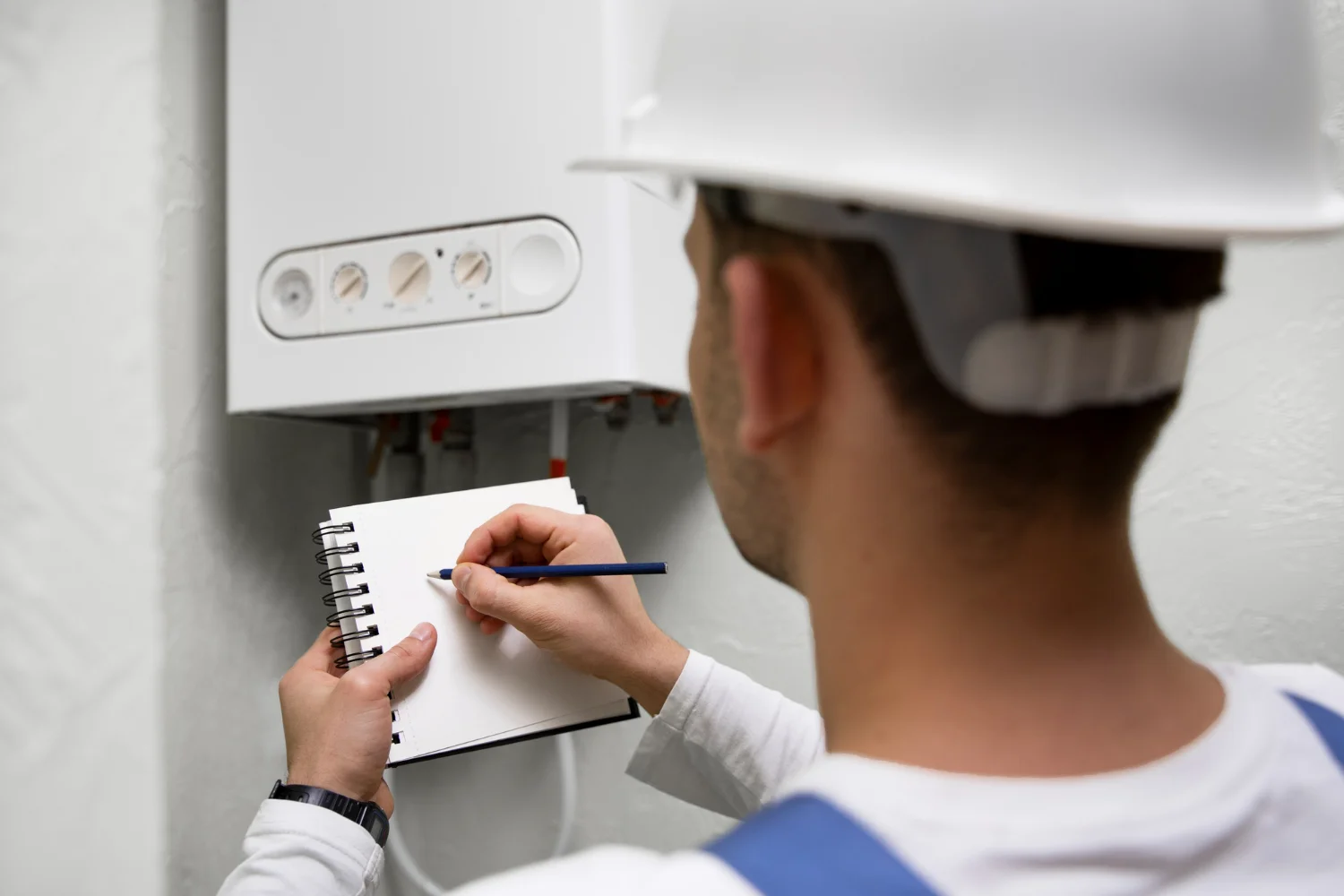
The first step is usually to establish what the homeowner has noticed.
Useful information can include:
- When the problem first appeared
- Whether the fault is intermittent
- Whether heating or hot water is affected
- Any error codes displayed
- Whether pressure changes have occurred
- Whether the boiler makes unusual sounds
- Whether previous repairs have been carried out
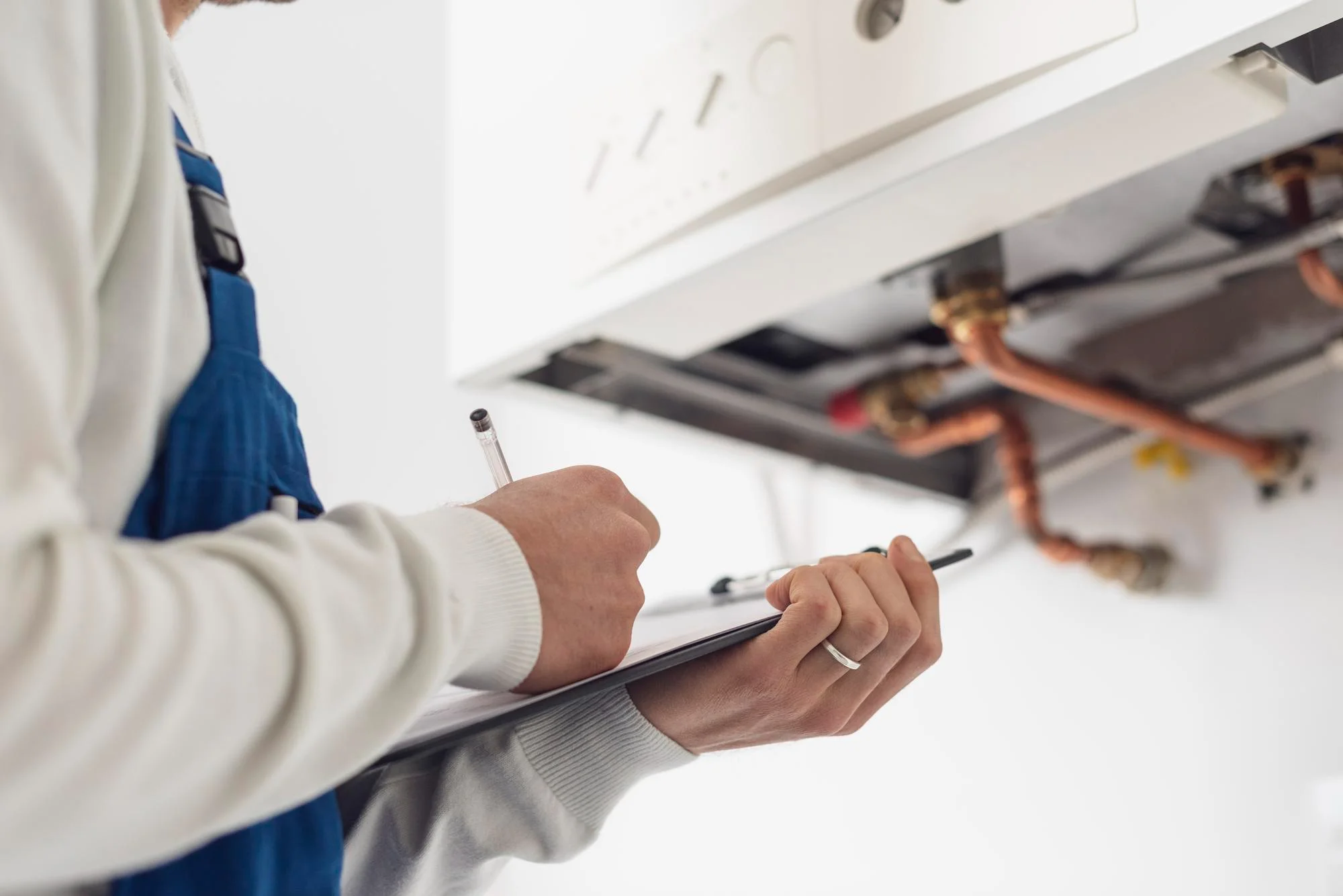
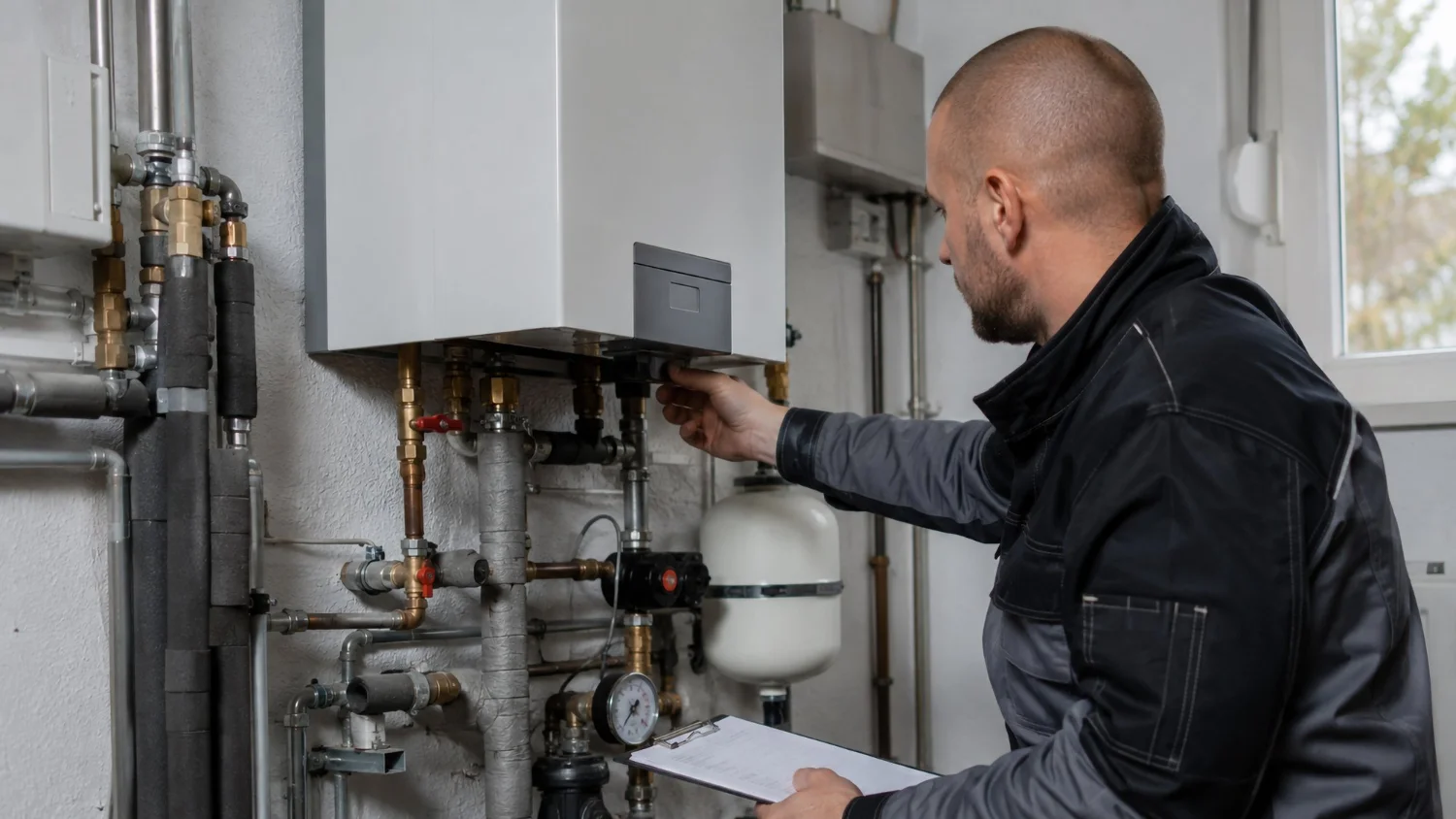
The engineer can then inspect the appliance and relevant parts of the heating system.
Depending on the symptoms, this may involve checking controls, pressure, components, connections and system operation.
The precise diagnostic process depends on the boiler and fault.
Could the problem be outside the boiler itself?
Yes. A heating problem does not always originate inside the boiler.
For example, issues with controls, thermostats, pumps, valves, pipework or other heating components can affect how the system behaves.
This distinction matters when considering replacement. Installing a new boiler will not necessarily resolve a separate fault elsewhere in the heating system.
A wider assessment can therefore be more useful than simply looking at the boiler casing and deciding whether the appliance should be replaced.
Let’s get started, Which fuel powers your boiler?
Mains Gas
LPG
Oil
It just takes 60 Seconds
And then you can book a free consultation
How can diagnosis affect a replacement quotation?
A fault assessment can help identify the actual scope of a potential replacement.
Suppose an older boiler has stopped working. During the assessment, the engineer finds that the appliance itself has reached the end of its serviceable life, but also identifies outdated controls and pipework that need consideration.
The replacement quotation can then account for the complete project rather than focusing solely on the boiler.
This can help prevent a situation where a homeowner agrees to a replacement and only later discovers that additional work is necessary.
What should a homeowner ask after a diagnosis?
A useful conversation should cover:
- What has caused the fault?
- Is the boiler safe to continue using?
- Can the fault be repaired?
- What would the repair involve?
- Are replacement parts available?
- Are there other system problems?
- If replacement is recommended, why?
- What additional installation work may be needed?
These questions help separate the immediate fault from the wider replacement decision.
When might repair be a sensible option?
Repair can make sense when the boiler is otherwise in reasonable condition and the fault is identifiable and economically practical to resolve.
For example, an older appliance may develop a single component fault without having a wider history of breakdowns. If the repair is straightforward and appropriate parts are available, replacement may not be necessary.
However, the decision depends on the individual appliance and circumstances.
A homeowner should also consider whether the same boiler has experienced repeated problems. A low-cost repair today does not necessarily mean the appliance is the most suitable long-term option.
When might replacement be worth considering?
Replacement may be considered when the boiler is older, repeatedly breaking down, inefficient compared with modern alternatives, difficult to repair or affected by significant component failures.
The likely future cost of maintaining the existing appliance can be relevant as well.
It is useful to compare the situation from both perspectives:
|
Consideration |
Repair |
Replacement |
|
Boiler age |
More relevant if relatively modern |
May favour replacement if very old |
|
Fault |
Suitable for a manageable fault |
May favour replacement if major |
|
Repair history |
Occasional fault may be manageable |
Repeated failures may change the calculation |
|
Parts |
Availability matters |
New appliance has current components |
|
Heating requirements |
Existing system may remain suitable |
Opportunity to reassess the system |
|
Initial expenditure |
Usually lower |
Usually a larger project |
|
Longer-term planning |
May extend appliance life |
Provides a new heating system |
This is not a universal rule. Each installation needs to be considered on its own circumstances.
Could repairing the boiler help with replacement planning?
Yes. Even if replacement is ultimately chosen, diagnosing the existing problem can provide useful information.
For example, the assessment may reveal that the existing boiler location works well, but the controls are outdated. Alternatively, it may show that the current system has pipework or circulation issues that should be addressed as part of the replacement.
This information can help the installer develop a more complete installation plan.
If a failing boiler has left you wondering whether to keep repairing it or plan a replacement, speak to Heatxpert. The team can discuss the condition of the existing system and explain the available options.
Should a boiler be repaired before a planned replacement?
Not always. If a boiler has already been assessed and replacement is clearly the appropriate course, carrying out an expensive repair immediately beforehand may not make sense.
However, the system still needs to be assessed properly. There can be a difference between diagnosing a fault and committing to a repair.
For example, if a boiler is leaking or failing to operate safely, the immediate priority is to establish its condition. The homeowner can then discuss whether a repair or replacement is the appropriate next step.
The decision should take account of the boiler’s condition, the nature of the fault and the likely installation requirements.
What if the boiler fails while waiting for replacement?
Sometimes a replacement is planned while the existing appliance is still operating. If it fails before installation day, the homeowner should contact the installer to explain what has happened.
Depending on the circumstances, a repair may be possible as a temporary measure. However, if replacement is already planned, the cost and practicality of carrying out temporary work should be considered.
It may also be worth checking whether existing boiler cover or home emergency cover applies, although the terms will vary between policies.
A typical Reading example
Consider a homeowner with an older gas boiler that has begun losing pressure several times a month. The heating sometimes stops working, but resetting the boiler restores operation temporarily.
Rather than immediately ordering a replacement, an engineer assesses the system. The inspection identifies an underlying issue affecting the heating circuit rather than simply treating the pressure symptom.
The homeowner can then decide whether to repair the existing system or plan a replacement based on its age, history and overall condition.
This illustrates why diagnosis can be useful. A visible symptom does not always reveal the actual cause.
What information should be included in a replacement recommendation?
If replacement is recommended after a fault assessment, the homeowner should receive a clear explanation of why.
Useful information can include:
- The condition of the existing boiler
- The identified fault or faults
- Whether repair is possible
- Why replacement may be more appropriate
- Recommended boiler type
- Proposed boiler location
- Required pipework changes
- Flue arrangements
- Controls
- Installation timescale
- Quotation and scope of work
This makes the transition from fault diagnosis to replacement easier to understand.
Can a boiler fault reveal wider heating problems?
It can. A boiler may be showing symptoms caused or influenced by another part of the system.
For example, circulation problems, pressure issues, controls or valves can affect heating performance. During an assessment, the engineer can consider whether these components should be checked before a new appliance is installed.
This matters because a new boiler is only one part of the heating system. Addressing relevant underlying problems can help the replacement operate as intended.
How can homeowners prepare for a boiler assessment?
Before the engineer arrives, make a note of what has been happening.
It is useful to record:
- Error codes
- When the boiler stops working
- Whether heating or hot water is affected
- How often the issue occurs
- Any unusual noises
- Pressure readings or changes
- Previous repair work
This information can help the engineer understand the history of the problem.
If you are considering replacement, also think about whether your household’s heating and hot water requirements have changed since the existing boiler was installed.
If your boiler is becoming unreliable, you do not necessarily need to decide between repair and replacement without professional guidance. Contact Heatxpert to discuss the symptoms, assess the existing system and plan the next step.
A boiler fault is not automatically a reason to replace the entire appliance. Diagnosis can help establish whether the issue is repairable, whether another part of the heating system is involved and whether replacement is likely to be the more practical option.
For homeowners researching boiler repair reading, understanding the condition of the existing system before installation begins can make the replacement process clearer and reduce the risk of overlooking related problems.
If replacement is appropriate, a proper assessment also helps establish what the new installation needs to include. Heatxpert can provide practical guidance based on the condition of the existing heating system, helping homeowners move from fault diagnosis to the next stage with greater confidence.
Related articles
Let’s get started, Which fuel powers your boiler?
Mains Gas
LPG
Oil
At a glance
Before arranging a replacement, it can be useful to establish what has actually gone wrong. Some faults can be repaired, while others may indicate that the appliance is reaching the end of its practical service life. A proper diagnosis can help a homeowner understand the difference.
For anyone researching boiler repair reading, the important question is not simply whether the boiler is broken. It is whether the fault can be resolved sensibly, whether other parts of the heating system are involved, and whether replacement is likely to provide a more practical long-term solution.
Why should a boiler fault be diagnosed before replacement?
A diagnosis provides information about the condition of the existing appliance and heating system. Without one, it can be difficult to know whether replacement is necessary or whether a relatively straightforward repair could restore the boiler to working order.
A heating engineer may investigate:
- The symptoms reported by the homeowner
- Fault codes shown on the boiler
- Pressure problems
- Ignition issues
- Heating and hot water performance
- Unusual noises
- Visible leaks
- Controls and thermostats
- Flue-related issues
- Relevant system components
The purpose is not necessarily to repair the boiler immediately. It is to establish what is happening so the homeowner can make an informed decision.
If your boiler has developed a fault and you are unsure whether repair or replacement makes more sense, contact Heatxpert for an assessment of the problem and practical guidance.
What common faults can affect an older boiler?
Boiler faults vary considerably. Some problems are relatively minor, while others can indicate a more significant component failure.
Common symptoms include:
- Boiler repeatedly switching off
- Loss of pressure
- No heating
- No hot water
- Radiators failing to heat properly
- Strange banging or whistling noises
- Fault codes appearing on the display
- Leaks around the boiler or heating system
- Pilot or ignition problems on applicable appliances
- Temperature problems
A symptom alone does not identify the underlying cause. For example, low pressure can have several possible causes, and a boiler repeatedly shutting down may be responding to another problem within the system.
This is why diagnosis matters before deciding what work is required.
Can a fault indicate that the boiler needs replacing?
Sometimes. The age and condition of the appliance, availability of replacement parts, frequency of breakdowns and likely repair cost can all be relevant.
An engineer may determine that a repair is technically possible but that the boiler has reached a stage where repeated repairs are becoming difficult to justify. Another appliance may have a relatively straightforward fault that can be repaired without replacement.
The decision should therefore be based on the actual condition of the system rather than a single symptom.
For homeowners looking into boiler repair reading, a diagnosis can provide useful evidence before committing to a new installation.
What happens during a boiler fault assessment?
The first step is usually to establish what the homeowner has noticed.
Useful information can include:
- When the problem first appeared
- Whether the fault is intermittent
- Whether heating or hot water is affected
- Any error codes displayed
- Whether pressure changes have occurred
- Whether the boiler makes unusual sounds
- Whether previous repairs have been carried out
The engineer can then inspect the appliance and relevant parts of the heating system.
Depending on the symptoms, this may involve checking controls, pressure, components, connections and system operation.
The precise diagnostic process depends on the boiler and fault.
Could the problem be outside the boiler itself?
Yes. A heating problem does not always originate inside the boiler.
For example, issues with controls, thermostats, pumps, valves, pipework or other heating components can affect how the system behaves.
This distinction matters when considering replacement. Installing a new boiler will not necessarily resolve a separate fault elsewhere in the heating system.
A wider assessment can therefore be more useful than simply looking at the boiler casing and deciding whether the appliance should be replaced.
Let’s get started, Which fuel powers your boiler?
Mains Gas
LPG
Oil
It just takes 60 Seconds
And then you can book a free consultation
How can diagnosis affect a replacement quotation?
A fault assessment can help identify the actual scope of a potential replacement.
Suppose an older boiler has stopped working. During the assessment, the engineer finds that the appliance itself has reached the end of its serviceable life, but also identifies outdated controls and pipework that need consideration.
The replacement quotation can then account for the complete project rather than focusing solely on the boiler.
This can help prevent a situation where a homeowner agrees to a replacement and only later discovers that additional work is necessary.
What should a homeowner ask after a diagnosis?
A useful conversation should cover:
- What has caused the fault?
- Is the boiler safe to continue using?
- Can the fault be repaired?
- What would the repair involve?
- Are replacement parts available?
- Are there other system problems?
- If replacement is recommended, why?
- What additional installation work may be needed?
These questions help separate the immediate fault from the wider replacement decision.
When might repair be a sensible option?
Repair can make sense when the boiler is otherwise in reasonable condition and the fault is identifiable and economically practical to resolve.
For example, an older appliance may develop a single component fault without having a wider history of breakdowns. If the repair is straightforward and appropriate parts are available, replacement may not be necessary.
However, the decision depends on the individual appliance and circumstances.
A homeowner should also consider whether the same boiler has experienced repeated problems. A low-cost repair today does not necessarily mean the appliance is the most suitable long-term option.
When might replacement be worth considering?
Replacement may be considered when the boiler is older, repeatedly breaking down, inefficient compared with modern alternatives, difficult to repair or affected by significant component failures.
The likely future cost of maintaining the existing appliance can be relevant as well.
It is useful to compare the situation from both perspectives:
|
Consideration |
Repair |
Replacement |
|
Boiler age |
More relevant if relatively modern |
May favour replacement if very old |
|
Fault |
Suitable for a manageable fault |
May favour replacement if major |
|
Repair history |
Occasional fault may be manageable |
Repeated failures may change the calculation |
|
Parts |
Availability matters |
New appliance has current components |
|
Heating requirements |
Existing system may remain suitable |
Opportunity to reassess the system |
|
Initial expenditure |
Usually lower |
Usually a larger project |
|
Longer-term planning |
May extend appliance life |
Provides a new heating system |
This is not a universal rule. Each installation needs to be considered on its own circumstances.
Could repairing the boiler help with replacement planning?
Yes. Even if replacement is ultimately chosen, diagnosing the existing problem can provide useful information.
For example, the assessment may reveal that the existing boiler location works well, but the controls are outdated. Alternatively, it may show that the current system has pipework or circulation issues that should be addressed as part of the replacement.
This information can help the installer develop a more complete installation plan.
If a failing boiler has left you wondering whether to keep repairing it or plan a replacement, speak to Heatxpert. The team can discuss the condition of the existing system and explain the available options.
Should a boiler be repaired before a planned replacement?
Not always. If a boiler has already been assessed and replacement is clearly the appropriate course, carrying out an expensive repair immediately beforehand may not make sense.
However, the system still needs to be assessed properly. There can be a difference between diagnosing a fault and committing to a repair.
For example, if a boiler is leaking or failing to operate safely, the immediate priority is to establish its condition. The homeowner can then discuss whether a repair or replacement is the appropriate next step.
The decision should take account of the boiler’s condition, the nature of the fault and the likely installation requirements.
What if the boiler fails while waiting for replacement?
Sometimes a replacement is planned while the existing appliance is still operating. If it fails before installation day, the homeowner should contact the installer to explain what has happened.
Depending on the circumstances, a repair may be possible as a temporary measure. However, if replacement is already planned, the cost and practicality of carrying out temporary work should be considered.
It may also be worth checking whether existing boiler cover or home emergency cover applies, although the terms will vary between policies.
A typical Reading example
Consider a homeowner with an older gas boiler that has begun losing pressure several times a month. The heating sometimes stops working, but resetting the boiler restores operation temporarily.
Rather than immediately ordering a replacement, an engineer assesses the system. The inspection identifies an underlying issue affecting the heating circuit rather than simply treating the pressure symptom.
The homeowner can then decide whether to repair the existing system or plan a replacement based on its age, history and overall condition.
This illustrates why diagnosis can be useful. A visible symptom does not always reveal the actual cause.
What information should be included in a replacement recommendation?
If replacement is recommended after a fault assessment, the homeowner should receive a clear explanation of why.
Useful information can include:
- The condition of the existing boiler
- The identified fault or faults
- Whether repair is possible
- Why replacement may be more appropriate
- Recommended boiler type
- Proposed boiler location
- Required pipework changes
- Flue arrangements
- Controls
- Installation timescale
- Quotation and scope of work
This makes the transition from fault diagnosis to replacement easier to understand.
Can a boiler fault reveal wider heating problems?
It can. A boiler may be showing symptoms caused or influenced by another part of the system.
For example, circulation problems, pressure issues, controls or valves can affect heating performance. During an assessment, the engineer can consider whether these components should be checked before a new appliance is installed.
This matters because a new boiler is only one part of the heating system. Addressing relevant underlying problems can help the replacement operate as intended.
How can homeowners prepare for a boiler assessment?
Before the engineer arrives, make a note of what has been happening.
It is useful to record:
- Error codes
- When the boiler stops working
- Whether heating or hot water is affected
- How often the issue occurs
- Any unusual noises
- Pressure readings or changes
- Previous repair work
This information can help the engineer understand the history of the problem.
If you are considering replacement, also think about whether your household’s heating and hot water requirements have changed since the existing boiler was installed.
If your boiler is becoming unreliable, you do not necessarily need to decide between repair and replacement without professional guidance. Contact Heatxpert to discuss the symptoms, assess the existing system and plan the next step.
A boiler fault is not automatically a reason to replace the entire appliance. Diagnosis can help establish whether the issue is repairable, whether another part of the heating system is involved and whether replacement is likely to be the more practical option.
For homeowners researching boiler repair reading, understanding the condition of the existing system before installation begins can make the replacement process clearer and reduce the risk of overlooking related problems.
If replacement is appropriate, a proper assessment also helps establish what the new installation needs to include. Heatxpert can provide practical guidance based on the condition of the existing heating system, helping homeowners move from fault diagnosis to the next stage with greater confidence.
